Mineral
Crisotilo
(Mg,Fe)₃Si₂O₅(OH)₄ · Silicato [Filosilicato (Grupo serpentina)]
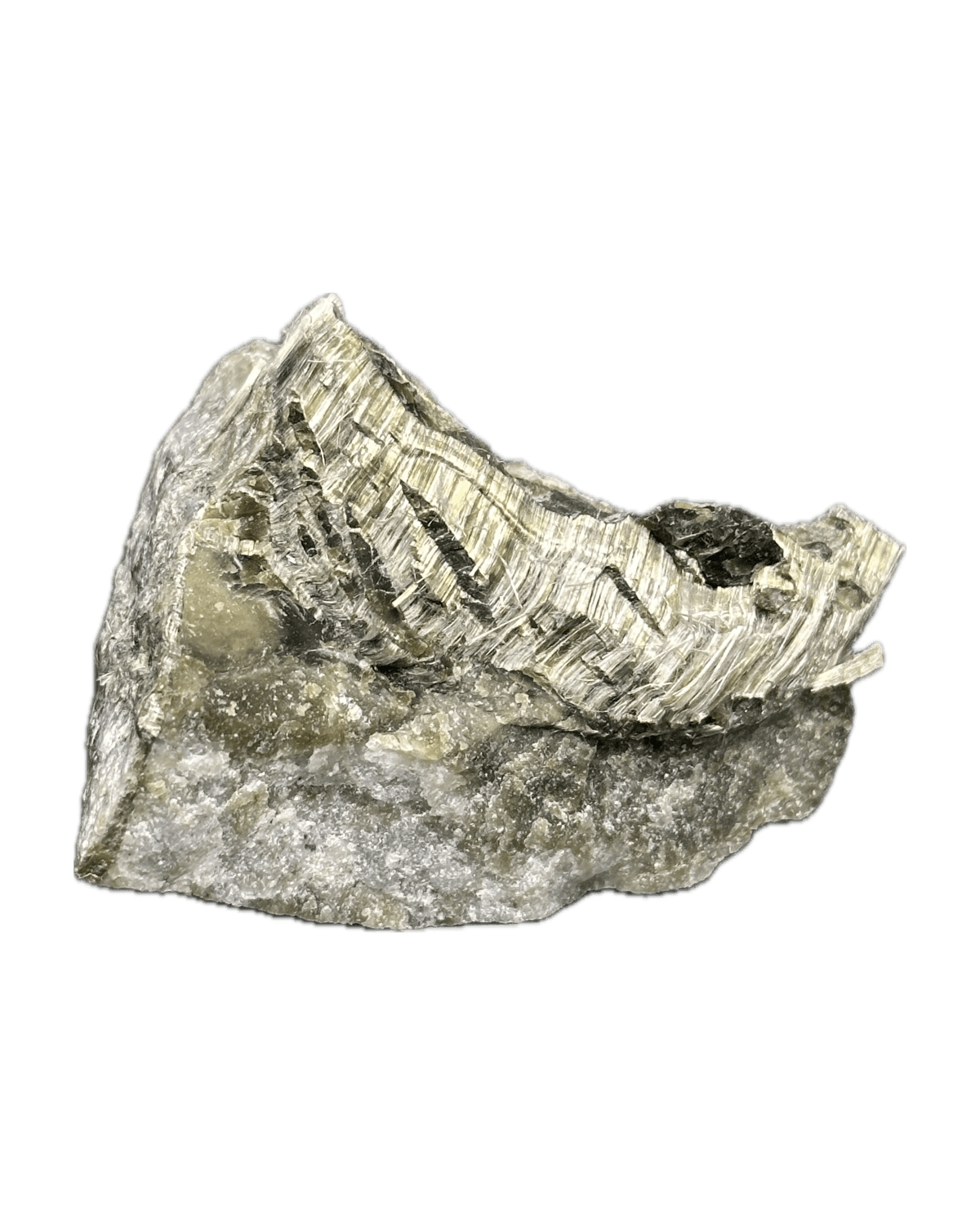
Chrysotile is a serpentine phyllosilicate that forms very fine, flexible fibres with a silky lustre and is one of the principal varieties of asbestos.
Asbestos, also called amianto, is a term that groups fibrous minerals of differing composition; its name derives from the Greek ásbestos, 'incombustible'. Chrysotile, known as white asbestos, is one of its principal varieties. Historically it was used as a thermal, electrical and acoustic insulator, and even to make cloth. Accounts mention a bag Benjamin Franklin brought from American Indians and a tablecloth Napoleon III cleaned by throwing into the fire to amuse his guests.
In 1977 it reached its production peak. Annual output stood at about 4–5 million tonnes. Thereafter its use fell sharply once the serious health risks from inhalation of its fibres were confirmed.
Etymology
From the combination of two Greek words: "chrysos" (χρυσός), meaning "gold", and "tilos" (τίλος), meaning "fibre". The name "gold fibre" describes its golden lustre and fibrous habit.