Estibina
Estibina is a mineral with formula Sb₂S₃, in the Sulfuros group. This specimen comes from Mina Herja, Baia Mare, Maramureș, Transilvania, Rumanía.
Description
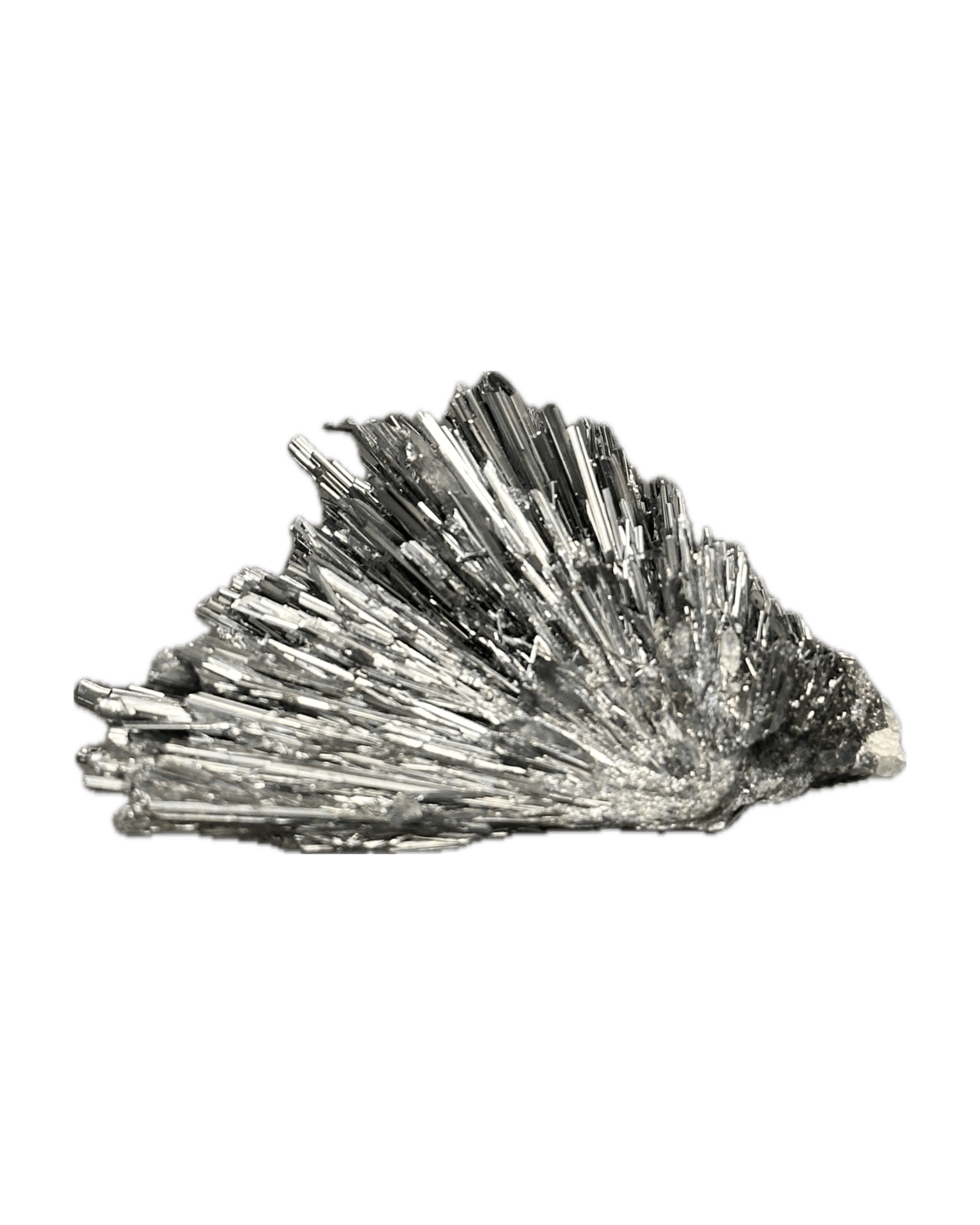
Radial fan of stibnite composed of very fine acicular crystals with metallic lustre and silvery reflections. Notable for its radial symmetry. A few tiny "Herkimer" quartz crystals accompany it at the base.
History of this specimen
Mr Otto, was a very meticulous Austrian collector and the previous owner of this piece. He never had a car, so they would pick him up at home, take him to the exchange, and drive him back afterwards. He stayed from start to finish, examining each specimen with a loupe and care. That attentive, exacting eye chose this piece.
About Estibina
Ground for millennia, stibnite gave rise to kohl, a cosmetic used to protect eyes from the sun and infections—Egyptian jars of the mixture have been found alongside the raw mineral. In classical Greece, it was called stibi or platyophthalmos ("bright-eyed") after this black powder, which the Romans adapted into stibium, the source of the chemical symbol Sb.
About the locality
The name of the city, Baia Mare, means Great Mine. The Herja mine is one of the classic deposits of Maramureș, Romania. Known for sulphide parageneses, it has produced some of the best radial aggregates of stibnite worldwide, especially in the 1980s and 1990s. When these mines were operating, miners knew that specimens as fragile as this had value and could provide extra income. When they found a delicate piece, they would often keep it in empty food tins and pack it with grease so the mineral was protected during transport without damage. In 2000, Baia Mare suffered a terrible cyanide spill, one of the largest environmental disasters in European mining, which became a reference case for the European Commission in tightening mining-waste regulation.
Technical data
- Catalogue No.
- 0015
- Composition
- Sb₂S₃
- Name
- Estibina
- Group
- Sulfuros
- Category
- Asteris Explosio
- Associations
- Cuarzo
- Mine
- Mina Herja
- District / Municipality
- Baia Mare
- Province
- Maramureș
- Region
- Transilvania
- Country
- Rumanía
- Size (cm)
- 6 x 5 x 3
- Weight
- 27 g
- Ex-collection
- Otto Lengauer
- Etymology
- The name stibnite spans more than two thousand years of history. In Classical Greek it was known as stibi or stimmi, and also as platyophthalmos, "the bright-eyed one", in direct allusion to its cosmetic use. The Romans adopted the term as stibium, origin of the chemical symbol Sb for antimony. Over time the mineral acquired other names—such as antimonite, with its apocryphal "monk-killer" tale of well-meaning alchemists, and again stibine—that reflect the languages and eras that tried to name and understand it.
- Quality
- Top
- Value trend
- Estable
Related specimens
- Oropimente — China
- Esfalerita (Marmatita) — Rusia
- Estibina — Rumanía
- Estibina — Rumanía
- Estibina — Rumanía
- Realgar — Rumanía
- Pararealgar — Rumanía
- Galena — España