Mineral
Vesuvianita
Ca₁₉(Al,Mg,Fe)₁₃(SiO₄)₁₀(Si₂O₇)₄(OH)₁₀ · Nesosilicatos
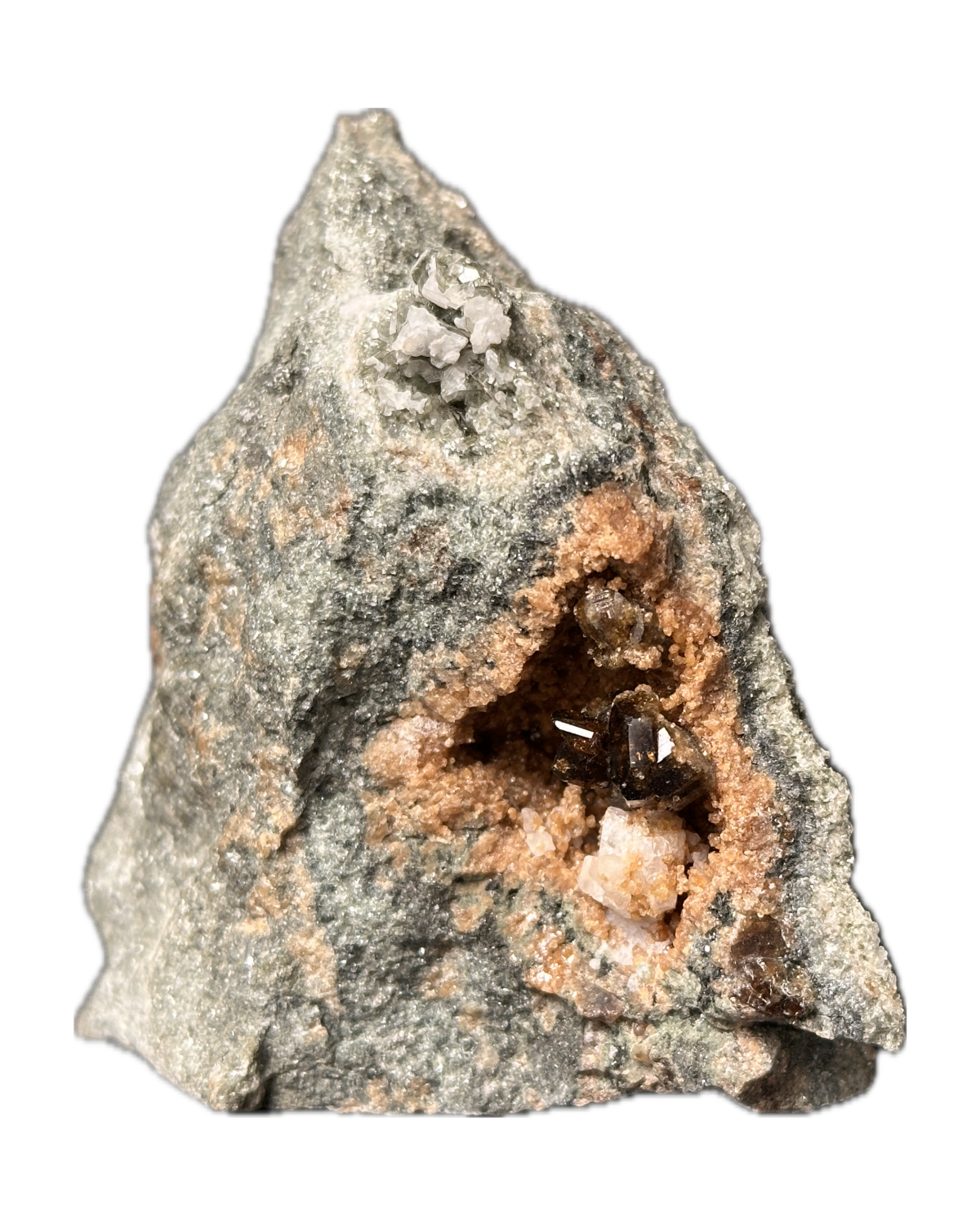
Vesuvianite is a calcium and aluminium silicate with a complex structure.
Its crystal framework has several sites that can host cations similar in size and charge. It is recognised for its tetragonal prisms. It shows green or brown colours.
An emblematic stone of Vesuvius. It was discovered on that volcano. There it was first described. Classic material.
Etymology
Also called "idocrase", it was first known as "dodecahedral hyacinth" and later as "Vesuvius hyacinth". In 1795 Abraham Gottlob Werner formally described it and named it "Vesuvian" (vesuvianite) in reference to its type locality.