Mineral
Estibina
Sb₂S₃ · Sulfuros
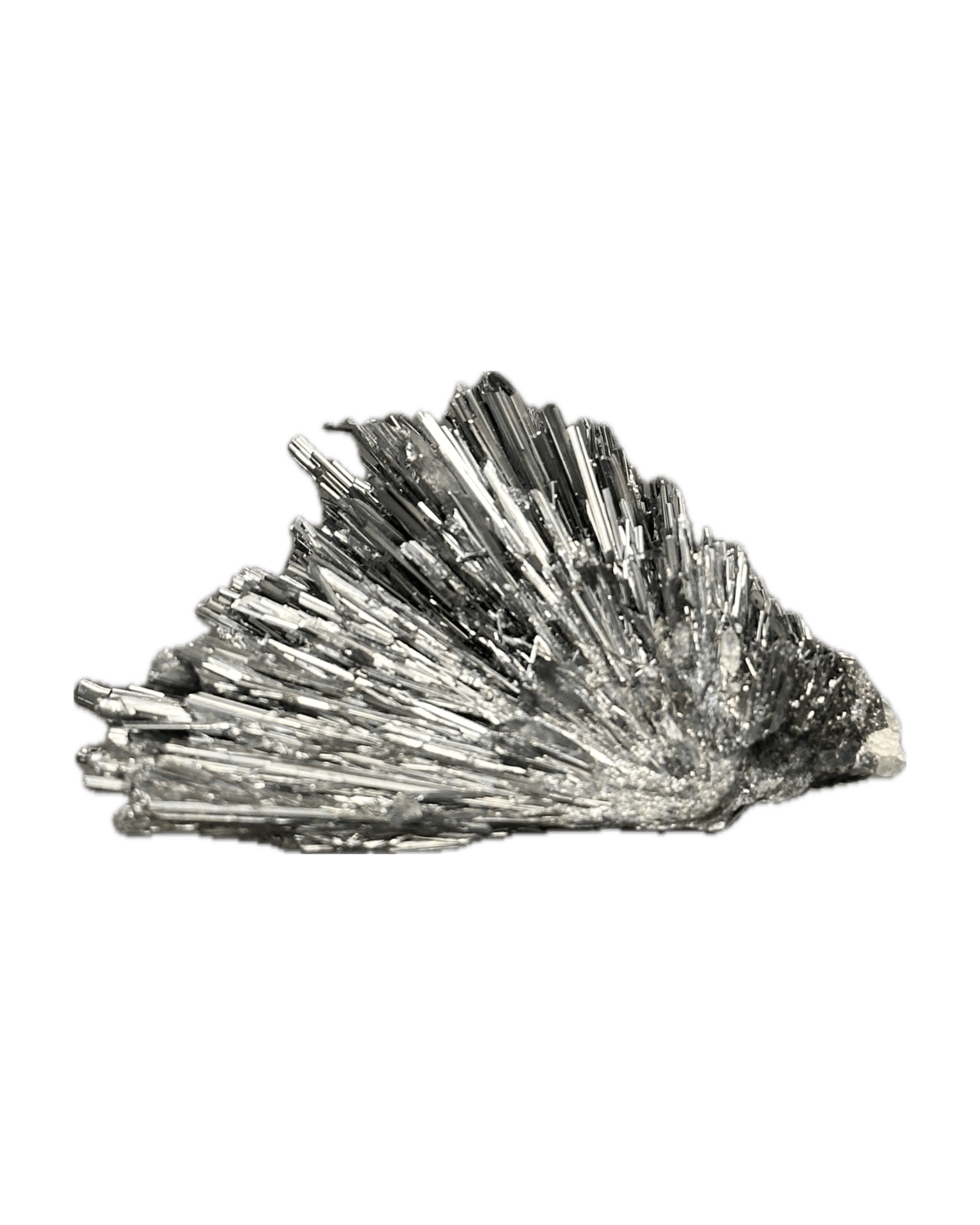
Stibnite is an antimony sulphide with formula Sb₂S₃.
Before its chemical formula was established, it was ground in Egypt to make kohl, a medicinal eye cosmetic that protected against sun, dust and infections. Grave goods include jars with the prepared cosmetic placed beside the raw mineral. In classical Greek it was known as stíbi or platyophthalmos ("bright eyes"), and also as stimmi. The Romans adopted stibium, source of the chemical symbol Sb.
In Europe, Maramureș (Romania) is its most celebrated occurrence. Since the 18th century it set the standard for the species’ acicular habit. Specimens show steel-grey prismatic crystals with strong metallic lustre and bluish tarnish. Their spear-like aspect contrasts with an inherent delicacy due to low hardness (Mohs 2) and perfect cleavage.
Etymology
The name stibnite spans more than two thousand years of history. In Classical Greek it was known as stibi or stimmi, and also as platyophthalmos, "the bright-eyed one", in direct allusion to its cosmetic use. The Romans adopted the term as stibium, origin of the chemical symbol Sb for antimony. Over time the mineral acquired other names—such as antimonite, with its apocryphal "monk-killer" tale of well-meaning alchemists, and again stibine—that reflect the languages and eras that tried to name and understand it.
Specimens in the collection (8)
- Estibina — Mina Herja, Baia Mare, Maramureș, Transilvania, Rumanía № 0015
- Estibina — Mina Wuning, Qingjiang, Jiujiang, Jiangxi, China № 0090
- Estibina — Xikuangshan Sb deposit, Loudi, Hunan, China № 0101
- Estibina — Mina Wuning, Quingjiang, Jiujiang, Jiangxi, China № 0241
- Estibina — Minas de Madan, Madan, Smolyan, Bulgaria № 0441
- Estibina — Baia Sprie Mine, Baia Sprie, Maramureș, Transilvania, Rumanía № 0647
- Estibina — Baia Sprie Mine, Baia Sprie, Maramureș, Transilvania, Rumanía № 0677
- Estibina — Baia Sprie Mine, Baia Sprie, Maramureș, Transilvania, Rumanía № 0696